

‘My heart is crying’: Afghan refugees wait on family members to join them in Canada
Advertisement
Read this article for free:
or
Already have an account? Log in here »
To continue reading, please subscribe:
Digital Subscription
One year of digital access for only $75*
- Enjoy unlimited reading on winnipegfreepress.com
- Read the E-Edition, our digital replica newspaper
- Access News Break, our award-winning app
- Play interactive puzzles
*Billed as $5.77 plus GST every four weeks. After 52 weeks, price increases to the regular rate of $19.95 plus GST every four weeks. Offer available to new and qualified returning subscribers only. Cancel any time.
Monthly Digital Subscription
$4.99/week*
- Enjoy unlimited reading on winnipegfreepress.com
- Read the E-Edition, our digital replica newspaper
- Access News Break, our award-winning app
- Play interactive puzzles
*Billed as $19.95 plus GST every four weeks. Cancel any time.
To continue reading, please subscribe:
Add Free Press access to your Brandon Sun subscription for only an additional
$1 for the first 4 weeks*
- Enjoy unlimited reading on winnipegfreepress.com
- Read the E-Edition, our digital replica newspaper
- Access News Break, our award-winning app
- Play interactive puzzles
*Your next Brandon Sun subscription payment will increase by $1.00 and you will be charged $17.95 plus GST for four weeks. After four weeks, your payment will increase to $24.95 plus GST every four weeks.
Read unlimited articles for free today:
or
Already have an account? Log in here »
Hey there, time traveller!
This article was published 22/12/2022 (1345 days ago), so information in it may no longer be current.
TORONTO – Khalid Khogiani arrived in Canada from Afghanistan through Pakistan more than a year ago and has been waiting for the Canadian government to process the refugee applications for his wife, mother and siblings ever since.
The 34-year-old, who worked as a computer assistant and interpreter with the Canadian Armed Forces in Kandahar between 2009 and 2011, said he applied for asylum at Canada’s embassy in Kabul and got his visa before the Taliban seized control of the Afghan capital in August 2021. He arrived in Canada two months after the takeover, but the rest of his family stayed in the family’s house in Afghanistan.
“When I remember my mother, I cry, my heart is crying, my mind is crying,” he said.
“We spend difficult time … when you are separated from your family and you come to Canada and your family is in Afghanistan, you know the pain.”
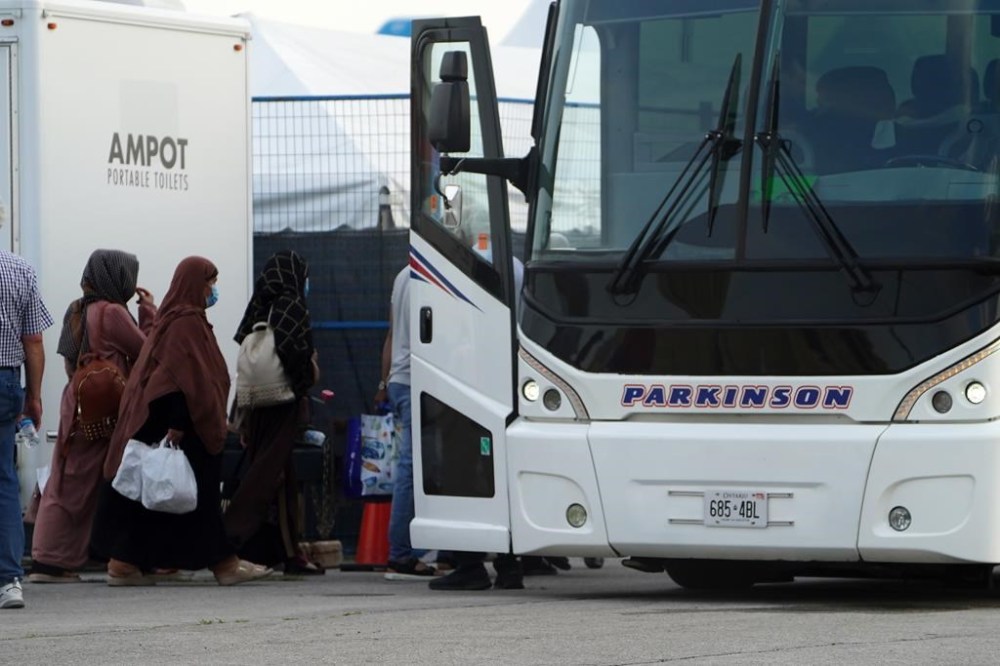
Khogiani is among the Afghan refugees who came to Canada on their own or with some of their family members since the fall of Kabul. Many who applied for their loved ones to join are left to wait for their applications to be approved.
The federal Liberal government initially promised to settle 20,000 Afghan refugees and then doubled that commitment to 40,000 during the election campaign in 2021.More than 26,000 Afghan refugees have already arrived in Canada.
As many more wait, the situation in Afghanistan is further deteriorating — especially for girls and women. The Taliban rulers banned female students from attending university this week in their latest crackdown on women’s rights and freedoms.
The Taliban was ousted from power by a U.S.-led coalition, that included Canada, in 2001 in the aftermath of 9/11, but returned last year after the U.S. abruptly and chaotically departed.
Khogiani said his horrific one-and-a-half-month journey from Kabul to Toronto started when agents working with Canada smuggled his brother and him through the border to Pakistan at night.
They had to hide from the Pakistani police in Islamabad until his flight to Canada was finally booked, he added.
He tried to bring the rest of his family, but the Canadian government told him that adding others to his application would jeopardize his evacuation.
“I said to the (immigration department), I have my family there, so I cannot go to Canada without my family,” Khogiani said.
“They said, ‘if you want to include your other family members, your case will be delayed. Do not do that’.”
The Afghan refugee, who now works as a technician with Bell Canada in Bradford, Ont., said he eventually decided to come to Canada on his own and apply from here for his family members to join him.
His brother landed in Toronto a few weeks after him but the rest of his family members, who recently moved to Pakistan, are still waiting for their refugee applications to be processed, he said.
“I was scared. I was worried. So, I decide I need to go alone,” Khogiani said.
Mona Elshayal, co-founder of a volunteer group called Canadian Connections that has been helping Afghan refugees to come to Canada, said many of the Afghan refugees who arrived here last year filled out the forms to bring their family members right after landing in Canada.
“People who came (after) August 2021 who are trying to bring their families, other family members, who helped the Canadian government or military and followed their processes, called in, registered them, filled in the paperwork, there’s no updates on their paperwork,” she said.
“There’s no way to get an update on the application — if anybody is ever going to come.”
She said the delay has a negative affect those who came here, but it’s devastating those who are waiting overseas to be united with their loved ones in Canada.
“There’s people who have travelled outside Afghanistan waiting for the Canadian government to bring them in and there’s no update on their application,” she said.
“They’re in limbo, because they’re stuck. They can’t go back. They don’t know if the Canadian government is ever going to bring them.”
A spokeswoman for the federal immigration department said the government recognizes that’s it’s important to keep families together but it’s facing a “significant challenge” to process the family reunification applications for Afghan refugees as many of the family members are still in Afghanistan.
“We are navigating a constantly evolving situation in Afghanistan in which the government of Canada has no military or diplomatic presence,” Michelle Carbert said in a statement.
“Movement out of Afghanistan by air and land continues to be very difficult and dangerous, and the absence of stable conditions and ever-changing circumstances around exit documentation requirements impacts our ability to move people quickly.”
Carbert said the government is generally unable to process an application until applicants reach a third country, submit their biometrics and meet other requirements.
“Applications continue to be processed as quickly as possible both remotely and digitally through our network of visa officers,” she said. “These cases are also often very complex and processing will take longer as we work to receive information and work through their application. Every step along the way can bring a unique challenge depending on the individual’s circumstances.”
Stephen Watt, co-founder of Northern Lights Canada, a non-profit that’s been helping Afghan refugees in Toronto, said Canada’s response to the refugee crisis in Afghanistan has not met the expectations and needs of those who helped Canada in Afghanistan.
“Canada talks about trying to be humanitarian and help these people, but then it handicaps its own programs with things like quota limits and paperwork requirements.”
“The consequence of all this is not that people (here) feel happy that they’re able to help people (in Afghanistan) who deserve it, they just feel frustrated and dismayed and disappointed.”
The government introduced a new program in September to allow Canadian individuals and organizations to privately sponsor up to 3,000 Afghan refugees who don’t have refugee status from the United Nations refugee agency or a foreign state.
But for Watt, it is another example of Canada’s lacklustre response to the crisis in Afghanistan because it was not only capped at 3,000 applications, but it also required private sponsors to complete a special training course.
“If Canada really meant what it said about being a humanitarian country that has close ties with Afghan people, especially the ones who have relatives here or who have helped us, they would make things easier, not harder every time,” he said.
This report by The Canadian Press was first published Dec. 22, 2022.
Related Articles
Senator’s actions befitted crisis situation
Advertisement Advertise With Us
Advertisement Advertise With Us