

Brian McKeever is Canada’s most decorated winter Paralympian. But it’s never been about the medals
Advertisement
Read this article for free:
or
Already have an account? Log in here »
To continue reading, please subscribe:
Digital Subscription
One year of digital access for only $75*
- Enjoy unlimited reading on winnipegfreepress.com
- Read the E-Edition, our digital replica newspaper
- Access News Break, our award-winning app
- Play interactive puzzles
*Billed as $5.77 plus GST every four weeks. After 52 weeks, price increases to the regular rate of $19.95 plus GST every four weeks. Offer available to new and qualified returning subscribers only. Cancel any time.
Monthly Digital Subscription
$4.99/week*
- Enjoy unlimited reading on winnipegfreepress.com
- Read the E-Edition, our digital replica newspaper
- Access News Break, our award-winning app
- Play interactive puzzles
*Billed as $19.95 plus GST every four weeks. Cancel any time.
To continue reading, please subscribe:
Add Free Press access to your Brandon Sun subscription for only an additional
$1 for the first 4 weeks*
- Enjoy unlimited reading on winnipegfreepress.com
- Read the E-Edition, our digital replica newspaper
- Access News Break, our award-winning app
- Play interactive puzzles
*Your next Brandon Sun subscription payment will increase by $1.00 and you will be charged $17.95 plus GST for four weeks. After four weeks, your payment will increase to $24.95 plus GST every four weeks.
Read unlimited articles for free today:
or
Already have an account? Log in here »
Hey there, time traveller!
This article was published 03/03/2022 (1699 days ago), so information in it may no longer be current.
With so much of the conversation around sports dominated by who’s winning and cashing in on it, who’s losing, and the incredible lengths that athletes and teams will go in the drive to step on the podium or hoist the trophy, talking to Brian McKeever is a bit like stepping back in time.
McKeever is in Beijing about to compete at his sixth Paralympics. He doesn’t talk about wanting to win medals, though if history is any lesson he certainly will. He is already Canada’s most successful winter Paralympian and the world’s most successful para cross-country skier with 17 Paralympic medals, 13 of them gold.
The medals are “nice” but they’re really for other people to enjoy, McKeever says. For him, the reward is the knowing.
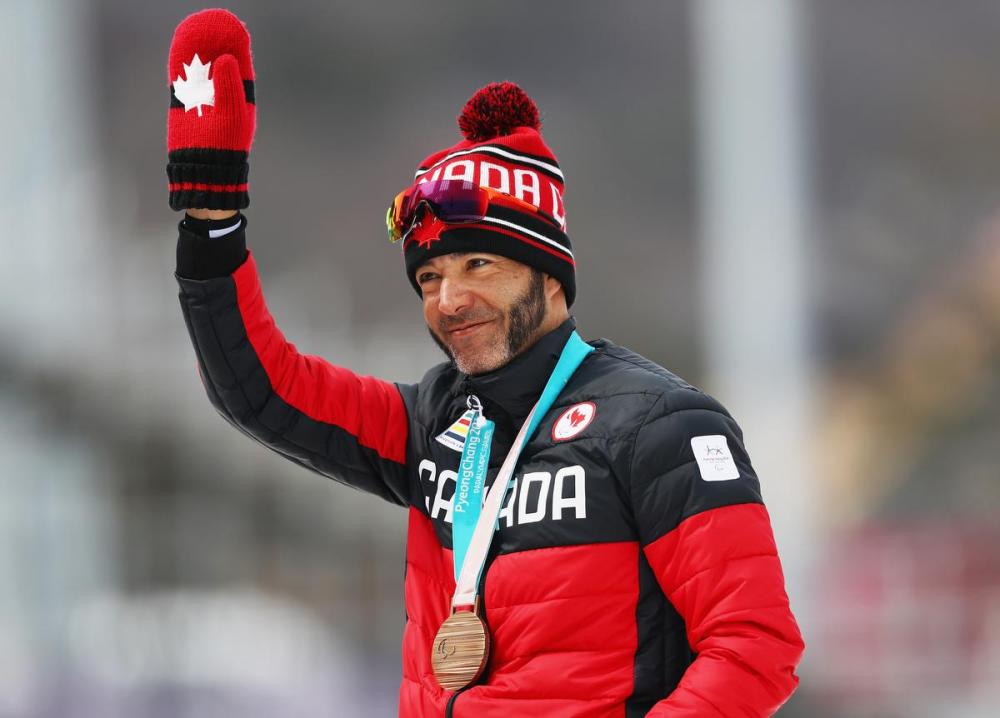
He wants to know how good he can be. What can he do if he pushes his body just a little more, if he trains and races a touch smarter, if he sets up his equipment a fraction better?
In short, can he make himself better today than he was yesterday? Answering that question, he says, is what has always driven him — from his first Paralympics in Salt Lake City in 2002 to Beijing 2022, which he says will be his last.
“I’ve never done any of this for medals. It’s always just been because I wanted to see what my own limits were,” says McKeever, who started losing his eyesight in his late teens. “I wanted to, each year, try and get just a little bit better, to tweak the training to see if I could make something work just a little better.
“At the end of the day, if somebody puts a medal around your neck, well, that’s nice, too. But that wasn’t the reason. It was just about trying to get that feeling of a great race on the right day.”
McKeever is on to something important when he talks about his love of sport and what success means to him, says Stéphane Barrette, CEO of Nordiq Canada, the national body for cross-country skiing.
“The medals that athletes win, whether they have a disability or not, don’t carry a lot of meaning if the athletes are not doing something bigger with that medal,” he says. “The medal represents an aura on the athlete and gets people’s attention. But then to really give meaning and value to the medal, they have to do something with it. And Brian certainly always got that and really embraced that role and responsibility to act as a mentor, an ambassador, not just for the sport, but for all kinds of human values that we adhere to and promote.”
Barrette acknowledges this probably isn’t what Canadians are used to hearing from top athletes or sport executives.
“In North America most of the spotlight is on professional sports so it might not be something that the general population is accustomed to hearing very often. But the more we share this message, I think the more it helps grow our own sport culture — a real sport culture where our appreciation of sports goes beyond how many medals we win at Olympics and Paralympics.”
As head of a national sport body, Barrette is responsible for pushing cross-country skiing forward on all fronts, from developing the grassroots to increasing elite medal-winners and ensuring a healthy sports culture. In all those goals, he’d be hard pressed to find a better role model than McKeever. His incredible sporting achievements and the bond with his brother, who was his first guide, even made its way into Super Bowl ad for Toyota, which is uncharacteristically high-profile attention for the sport of cross-country skiing in Canada.
But, lately, because of the COVID pandemic more Canadians have taken up the sport.
Participation had been stagnant for more than a decade, hovering between 50,000 to 55,000 members in Canada, according to the sport body’s figures. But when the COVID pandemic hit, people looking for safe outdoor activities literally emptied store shelves of cross-country skis and club membership rolls jumped 40 per cent to 77,000. So far, they’ve stayed there.
“You hear so many people say they hate winter and yet this sport is a great way to get through the winter and make a Canadian winter a little more bearable, maybe even start to enjoy it,” McKeever says.
The sport has always been a family affair in the McKeever household. His parents introduced him and his older brother, Robin, to the sport when they were children.
Brian started skiing when he was three and was racing by 12. Robin competed in the 1998 Nagano Olympics and, after Brian was diagnosed with Stargardt, an eye disease that causes loss of central vision, became his brother’s guide. He guided Brian to his first 10 Paralympic medals. Now Robin is Canada’s head Para nordic coach and his son, 18-year-old Xavier, is a fast-rising junior cross-country star on track for the 2026 Olympics.
McKeever’s first race in Beijing is on Monday and his plan is a simple one.
“I want to do my best,” he says. “But it’s not because I want to achieve a record or increase something or chase after a summer person (in the medal count) or whatever. I know there’s probably summer athletes with more medals but good for them. And I imagine that they didn’t do it for the medals, either.”
Kerry Gillespie is a Toronto-based sports reporter for the Star. Reach her via email: kgillespie@thestar.ca
Related Articles
Column: Russian sports ban unlikely to stop Putin's war


Advertisement Advertise With Us
Advertisement Advertise With Us