

Canada’s border to the U.S. opens as COVID-19 cases there surge. Here’s what experts expect
Advertisement
Read this article for free:
or
Already have an account? Log in here »
To continue reading, please subscribe:
Digital Subscription
One year of digital access for only $75*
- Enjoy unlimited reading on winnipegfreepress.com
- Read the E-Edition, our digital replica newspaper
- Access News Break, our award-winning app
- Play interactive puzzles
*Billed as $5.77 plus GST every four weeks. After 52 weeks, price increases to the regular rate of $19.95 plus GST every four weeks. Offer available to new and qualified returning subscribers only. Cancel any time.
Monthly Digital Subscription
$4.99/week*
- Enjoy unlimited reading on winnipegfreepress.com
- Read the E-Edition, our digital replica newspaper
- Access News Break, our award-winning app
- Play interactive puzzles
*Billed as $19.95 plus GST every four weeks. Cancel any time.
To continue reading, please subscribe:
Add Free Press access to your Brandon Sun subscription for only an additional
$1 for the first 4 weeks*
- Enjoy unlimited reading on winnipegfreepress.com
- Read the E-Edition, our digital replica newspaper
- Access News Break, our award-winning app
- Play interactive puzzles
*Your next Brandon Sun subscription payment will increase by $1.00 and you will be charged $17.95 plus GST for four weeks. After four weeks, your payment will increase to $24.95 plus GST every four weeks.
Read unlimited articles for free today:
or
Already have an account? Log in here »
Hey there, time traveller!
This article was published 09/08/2021 (1855 days ago), so information in it may no longer be current.
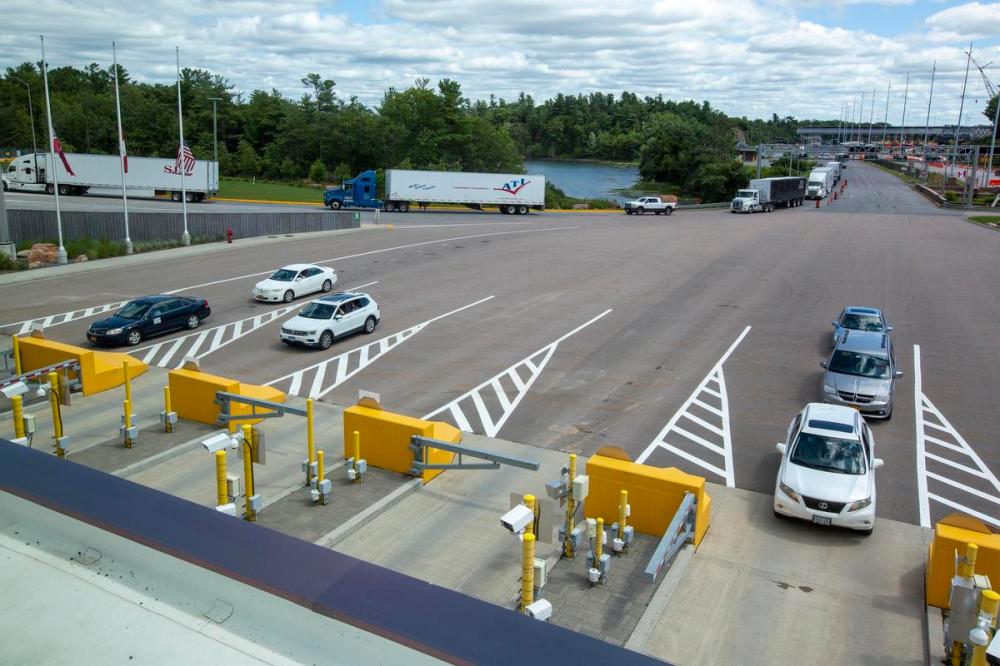
Canada opens its border to the U.S. Monday, amid rapidly rising cases of the COVID-19 Delta variant.
The decision to open the border was made when the U.S. was in a different place with cases, an infectious disease expert said. But with the situation changing on a dime, the move to reopen the border could present issues for Canadians.
Dr. Susy Hota, medical director of infection prevention and control at University Health Network, said she’s concerned by the rising case load south of the border.
“There’s a difference in the vaccination rate across the border — there’s just a difference in approaches,” she said, adding the lower levels of COVID-19 here could incentivize travellers to enter the country. “I worry about the possibility of importation of more cases.”
The U.S. recorded 92,714 new cases of the virus on Aug. 4. Over the weekend, it crossed the threshold into 100,000 new daily infections.
While travellers will need to be vaccinated against the virus before entering — that means two weeks out from a second dose with a Health Canada-approved COVID-19 vaccine — Hota said the possibility of breakthrough infections could lead to a new chain of transmission.
The growing caseload in the U.S. has appeared at a bad time, she said. “It’s a risky time to be doing this.” With children returning to school in September, Hota said many parents are wondering what the impact on classrooms will be.
“The biggest determinant of success in reopening schools will be whether you can control community transmission … so the timing is concerning,” she said.
Ensuring that masking mandates and other public health measures remain in place could help to protect Canadians against infection, Hota said. While vaccine uptake in Canada is high, it’s not high enough to interrupt transmission on its own, she said.
According to a July 19 press release from the federal government, the loosened restrictions on the U.S. border represent a first step before allowing further non-essential travel by other international travellers on Sept. 7.
“This preliminary step allows for the Government of Canada to fully operationalize the adjusted border measures ahead of Sept. 7, 2021, and recognizes the many close ties between Canadians and Americans,” the release said.
A reopened border presents a “wicked problem,” said Julia Zarb, an assistant professor at the Dalla Lana School of Public Health. A wicked problem is an issue that is ultracomplex, where potential solutions could reveal new issues, she explained.
We have a sense of what issues might arise from allowing vaccinated travellers into the country, she said. What we don’t know is the degree to which those issues might manifest. “The answers we want in advance won’t really be understood until we try out possible solutions. There are just too many variables,” Zarb said.
This doesn’t mean that Canadians are necessarily entering a “wait and see” stage, she noted. Rather, in order to find a solution to the issues a reopened border presents, “we have to take steps.”
Jenna Moon is a breaking news reporter for the Star and is based in Toronto. Follow her on Twitter: @_jennamoon
Related Articles
Canada reopens its border for vaccinated US visitors
Advertisement Advertise With Us
Advertisement Advertise With Us