

Archeological assessment critical in Assiniboine riverbank project: critics
Advertisement
Read this article for free:
or
Already have an account? Log in here »
To continue reading, please subscribe:
Digital Subscription
One year of digital access for only $75*
- Enjoy unlimited reading on winnipegfreepress.com
- Read the E-Edition, our digital replica newspaper
- Access News Break, our award-winning app
- Play interactive puzzles
*Billed as $5.77 plus GST every four weeks. After 52 weeks, price increases to the regular rate of $19.95 plus GST every four weeks. Offer available to new and qualified returning subscribers only. Cancel any time.
Monthly Digital Subscription
$4.99/week*
- Enjoy unlimited reading on winnipegfreepress.com
- Read the E-Edition, our digital replica newspaper
- Access News Break, our award-winning app
- Play interactive puzzles
*Billed as $19.95 plus GST every four weeks. Cancel any time.
To continue reading, please subscribe:
Add Free Press access to your Brandon Sun subscription for only an additional
$1 for the first 4 weeks*
- Enjoy unlimited reading on winnipegfreepress.com
- Read the E-Edition, our digital replica newspaper
- Access News Break, our award-winning app
- Play interactive puzzles
*Your next Brandon Sun subscription payment will increase by $1.00 and you will be charged $17.95 plus GST for four weeks. After four weeks, your payment will increase to $24.95 plus GST every four weeks.
Read unlimited articles for free today:
or
Already have an account? Log in here »
Hey there, time traveller!
This article was published 07/07/2020 (2286 days ago), so information in it may no longer be current.
When David Riddle pictures in his mind the Assiniboine and Red rivers, he imagines Métis children running along the banks in the mid-1800s, pumping their arms, trying to get captains of the riverboats trudging through the water to toot their horns.
The history of the rivers and the people who lived along them are immense, the retired archeologist told the Free Press.
It’s why when he heard about the City of Winnipeg’s plans to stabilize and redevelop the south bank of the Assiniboine River east of Assiniboine Park, he worried the appropriate precautions wouldn’t be taken to preserve or seek out that history.
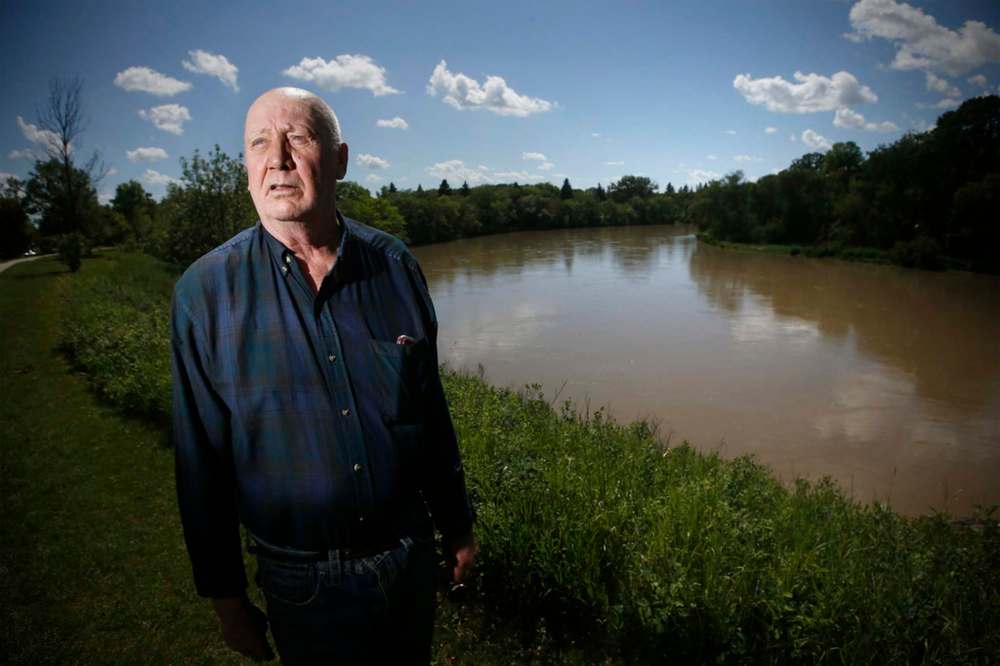
“This area has been used for 7,000 years at least, (it) has seen a whole series of cultures live on the edge of the river, and almost certainly there are remains of those cultures in the ground. In what condition? Nobody knows. You have to do work to be able to find that out,” Riddle said.
When Riddle reached out to civic administration, he was originally told monitoring would be taking place as the project was pursued. “Which is like saying, ‘We’re going to watch the thing be destroyed and not really do very much,’” he said.
The city’s proposed revitalization of the south bank of the river involves, among other things, moving a section of Wellington Crescent further south, costing an estimated $9.6 million to rebuild the roadway between Fulham Avenue and Grenfell Boulevard.
Coun. Kevin Klein (Charleswood-Tuxedo-Westwood) was already eager to press pause on the Wellington riverbank project due to cost concerns. After speaking with Riddle, he’s doubled down in his desire for the city to take a step back.
“We’ve waited 11 years, the riverbank is in no more danger today than it was a year ago, or two years ago. So, the project can be paused, we can wait another year and do this properly. It is Métis land. We acknowledge that we’re on the home of the Métis — it deserves, and the people deserve — for us to do the proper due diligence of archeological study on that land,” Klein said in an interview.
The City of Winnipeg has publicly promised on the project’s webpage to pursue a heritage resource impact assessment. Between the assessment and Klein’s involvement, Riddle said he is more assured his concerns are being taken seriously.
There still remains a great deal to learn about the Indigenous cultures that lived on the land before the 1700s, Riddle said, and due to a lack of written historical records, archeological exploration is the main way to learn more.
“The (Indigenous) people who lived here before have a right to have their history known,” Riddle said. “We have neglected this for quite a while in terms of standing up to make sure that the heritage resources that are in the ground are protected — and if they can’t be protected because of some kind of development, that they be mediated.”
— with files from Joyanne Pursaga
sarah.lawrynuik@freepress.mb.ca
Related Articles
Church branches out to beautify riverbank with help of non-profit
Advertisement Advertise With Us
Advertisement Advertise With Us