
Social media
Please review each article prior to use: grade-level applicability and curricular alignment might not be obvious from the headline alone.
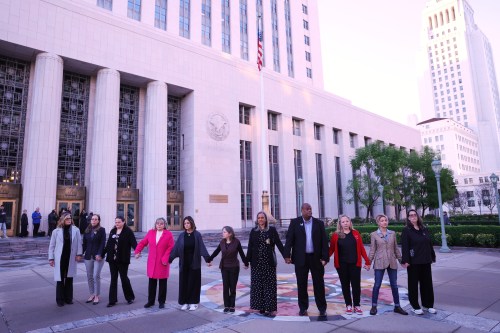
Social media can be addictive even for adults, but there are ways to cut back
7 minute read Preview Wednesday, Feb. 25, 2026
Google, Meta, push back on addiction claims in landmark social media trial
6 minute read Preview Tuesday, Mar. 3, 2026
Egypt to adopt restrictions on children’s social media use to fight ‘digital chaos’
2 minute read Preview Monday, Jan. 26, 2026
It’s not personal, AI… and that’s the problem
4 minute read Preview Saturday, Dec. 13, 2025Tools we use to determine what to trust
5 minute read Thursday, Dec. 11, 2025I rarely use Facebook, but I recently took a brief look. I was reminded how annoying it is when I was presented with numerous posts, photos and videos from people I don’t know. One caught my attention. It was a video of three adult male moose, all with huge antlers, attacking a colourfully decorated bus. Could the video possibly be real?
Curiously, it reminded me of a sentence in the memorandum of understanding between Prime Minister Mark Carney and Alberta Premier Danielle Smith. It says, “Canada and Alberta remain committed to achieving net zero greenhouse gas emissions by 2050.” Is that a true statement?
How can I know if either is true? For the moose video, I could try examining it carefully for oddities. For the politicians’ assertion, I could delve into their past statements about climate change. But that’s rather impractical. Given the deluge of information I encounter every day, I couldn’t possibly research every statement to check its veracity. What should I do?
I could use a common tactic. I could rely on shortcuts.

Sexual extortion of children for money is on the rise: financial intelligence agency
4 minute read Preview Friday, Nov. 28, 2025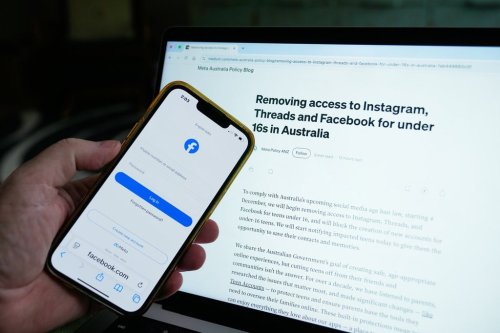
Australia will enforce a social media ban for children under 16 despite a court challenge
3 minute read Preview Thursday, Nov. 27, 2025Is it just me? Or is swearing on the rise, on television, in print, in our daily lives?
Toronto Blue Jays manager, John Schneider, let loose a few F-bombs during the Jays’ recent playoff run. Former Blue Bomber star Jermarcus Hardrick, in town to play for Saskatchewan in the Grey Cup, revealed the meaning of the tattoo on his forearm from his Grey Cup wins in Winnipeg.
The tattoo features the Grey Cup, the Bomber logo and the letters, FIFO, which stands for “Fit in or F-off.”
I expect few are surprised that the sports locker room remains fertile ground for swearing. What is surprising, at least to me, is the steady rise in so-called “colourful language” in public settings, including mainstream media, and of course social media platforms.
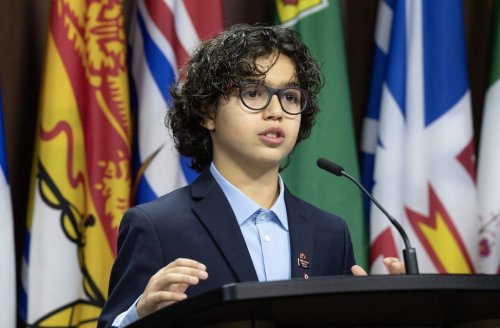
Child advocates urge government to bring back online harms legislation
4 minute read Preview Thursday, Dec. 4, 2025
Influencers have more reach on 5 major platforms than news media, politicians: report
5 minute read Preview Friday, Nov. 14, 2025
Dictionary.com’s word of the year is ‘6-7.’ But is it even a word and what does it mean?
3 minute read Preview Friday, Oct. 31, 2025When the internet first arrived in the mid-1990s, it screeched. Literally.
It screamed its way into our homes through the telephone lines, a metallic cry that sounded like the future forcing its way through. We waited through the static, convinced that life was about to get easier. People said it would save us time, let us work from home and give us more hours with our families.
No one mentioned that it would also move into our bedrooms, our pockets and our dreams. No one could have imagined that it would change how we fight, how we march, how we plead for justice. That the fight for justice itself would become a digital labyrinth where truth moves slowly and attention moves fast.
Back then, when a heroine from a popular early-2000s television show was dumped with nothing but a handwritten note, it became a cultural tragedy. There was nothing noble about writing your cowardice on a Post-it. A few years later, a company fired hundreds by email and it made national news. Today, we “quietly quit” through apps without blinking, edit our grief into reels, add the music the app suggests and call it closure.

TikTok as a tool — but for whom?
4 minute read Preview Wednesday, Oct. 1, 2025Algorithms of hate and the digital divide
5 minute read Friday, Sep. 26, 2025If recent events are any indication, it has become clear that the current use of technology has driven a wedge between people like never before.
The polarization of ideas, perspectives, ideologies, politics, identities, cultures, and other differences that are expected and should be celebrated in diverse and dynamic societies has resulted in an undercurrent of fear of the other, fuelled by media that reinforce our own beliefs and disavow others, the consequences of which are felt by a generation who more often is fed by and fed to an algorithm.
Imagine you are watching television and have a wide selection of channels to choose from: sports, news, cooking, mystery, sci-fi, the usual variety of channels. You decide to watch the golf channel for a while because you like golf. When you are done you go to the channel guide and discover that all your channels have changed to golf channels. Weird, but I like golf.
You go to the library. It has a great selection of thousands of books from all genres. You like mystery novels and pick one off the shelf to borrow. As you look up after reading the back cover, all the books in the library have changed to mystery novels. Mysterious, indeed.
We all live in glass houses now
5 minute read Preview Wednesday, Sep. 17, 2025
Winnipeg Jewish Theatre’s therapy-set two-hander plays with reality
4 minute read Preview Monday, Sep. 15, 2025
Blame game after acts of political violence can lead to further attacks, experts warn
7 minute read Preview Friday, Oct. 10, 2025
Equatorial Guinea enforces yearlong internet outage for island that protested construction company
6 minute read Preview Thursday, Oct. 16, 2025
Nepal internet crackdown part of global trend toward suppressing online freedom
5 minute read Preview Friday, Oct. 10, 2025
400+ brands in 5+ years: Winnipeg-based digital marketing firm Mad Social Agency continues to evolve
6 minute read Preview Monday, Sep. 8, 2025
Ryan Reynolds suggests swapping phones with a MAGA supporter, checking out their algorithm
2 minute read Preview Thursday, Dec. 4, 2025
YouTube using creators to enhance broadcast of the NFL game between the Chiefs and the Chargers
4 minute read Preview Wednesday, Oct. 15, 2025
How young content creators plan to balance their social media success and campus life
6 minute read Preview Friday, Oct. 10, 2025