Power and Authority
Please review each article prior to use: grade-level applicability and curricular alignment might not be obvious from the headline alone.
Maintenance isn’t enough — we have to build
5 minute read Tuesday, Feb. 17, 2026For the third year in a row, the atmosphere in Manitoba’s staffrooms during the provincial school funding announcement has been one of cautious relief rather than the dread we came to expect for a decade.
As a high school teacher-librarian and a parent with a child in the public system, I want to begin by acknowledging the progress made.
After the lean, adversarial years of the Brian Pallister and Heather Stefanson governments, years defined by the looming threat of Bill 64 and funding increases that didn’t even cover the cost of a box of pencils, the current NDP government has chosen a different path.
This $79.8-million injection for the 2026-27 school year, building on the $104-million and $67-million investments of the previous two years, represents nearly a quarter-billion-dollar shift in how we value our children’s future. For the nutrition programs, the salary harmonization, and the simple act of treating educators as partners rather than enemies: thank you.
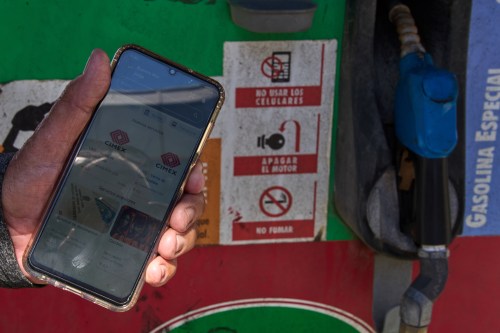
Cuban drivers face monthslong wait for gasoline in a government app designed to reduce lines
4 minute read Preview Wednesday, Feb. 18, 2026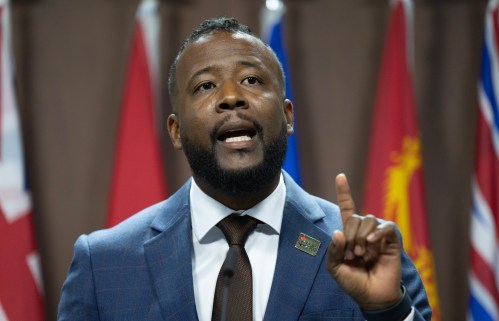
Advocate urges feds to update equity act, settle class action with Black employees
4 minute read Preview Tuesday, Feb. 17, 2026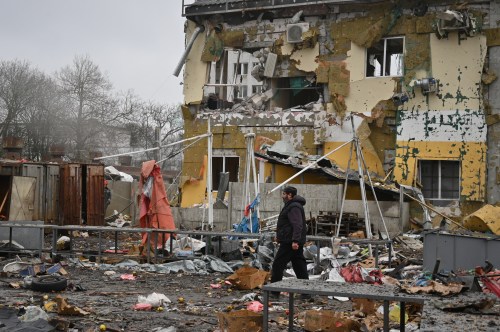
Ukrainian emergency visa holders expected to return after war: immigration department
5 minute read Preview Tuesday, Feb. 17, 2026City’s proposed ‘nuisance’ protest ban doesn’t pass Charter test
4 minute read Saturday, Feb. 14, 2026If the City of Winnipeg wants to protect public safety when it comes to protests, it should enforce laws that are already on the books.
What it should not do is pass a sweeping, constitutionally dubious bylaw that tramples on fundamental freedoms in the name of sparing people from being offended.
Yet that’s precisely what council is poised to do when it votes Feb. 26 on a proposed ban on so-called “nuisance” protests within 100 metres of a long list of “vulnerable social” locations — schools, hospitals, places of worship, post-secondary institutions, libraries, community centres, cemeteries and more.
On paper, the objective sounds noble: protect access, reduce intimidation, promote safety. In practice, the bylaw is far too broad, far too vague and far too discretionary to meet the Charter standard of a “reasonable limit.”
Protest bylaw goes too far
4 minute read Tuesday, Feb. 17, 2026From Minneapolis, to Tehran, to Bangladesh, people are taking to the streets to protest against perceived injustices.
Peaceful protest is a critically important line of defence against the unjust actions of governments.
Incredibly, here in Winnipeg, some members of our city council want to put strict limits on that essential right.
The proposed safe access to vulnerable infrastructure bylaw, if passed, would be the most draconian law of its kind in Canada.
Who is championing Canada in Alberta?
5 minute read Preview Saturday, Feb. 14, 2026
Tired of waiting, First Nation buys $8M worth of generators
5 minute read Preview Friday, Feb. 13, 2026AI a potent wedge issue in U.S. midterms
4 minute read Friday, Feb. 13, 2026Americans head to the polls again in November with no shortage of issues at stake. The White House’s weaponization of tariffs, immigration crackdown, government purges and foreign adventurism have roiled the nation. But calls to rein in artificial intelligence (AI) may ultimately gain the most traction for candidates.
The Trump administration’s AI Action Plan, released last summer, promises to assert U.S. technological dominance at breakneck speed. The strategy vows Washington will dismantle barriers to data centre construction, eliminate a raft of “woke” safety measures and lean on other nations to buy American tech.
Silicon Valley evangelists have fully bought in. Amazon, Meta, Google and Microsoft alone have announced US$650 billion in AI-related spending for 2026. That eclipses the GDP of countries such as Israel or Norway. It also doesn’t factor in other venture capital investments elsewhere, or outlays from OpenAI, Anthropic or the Elon Musk-owned xAI.
A market strategist told the Wall Street Journal last month that the U.S. could plausibly be in a recession if it weren’t for AI investments. Although this isn’t necessarily a good thing. America’s economic growth “has become so dependent on AI-related investment and wealth,” the paper reported,” that if the boom turns to bust, it could take the broader economy with it.”

Canada’s university funding system is broken
5 minute read Preview Friday, Feb. 13, 2026Progress on improving addictions help lagging: auditor general
3 minute read Thursday, Feb. 12, 2026The province has acted on only 20 per cent of the recommendations made three years ago on how to improve access to addictions services, says a report released by Manitoba’s auditor general Thursday.
Tyson Shtykalo had issued 15 recommendations to the government and Shared Health in 2023 to help Manitobans get the addictions help when they need it. His progress report said that as of Sept. 30, 2025, just three of the 15 recommendations had been acted upon while 12 remain a “work in progress.”
“‘Work in progress’ is not an acceptable response when Manitobans are dying due to the addictions crisis,” said Jason Linklater, president of the Manitoba Association of Health Care Professionals. It represents more than 100 addictions workers, counsellors, clinicians and others who provide care, treatment and support for Manitobans living with addictions.
“Significant barriers to access have not been addressed,” Linklater said in a statement Thursday.
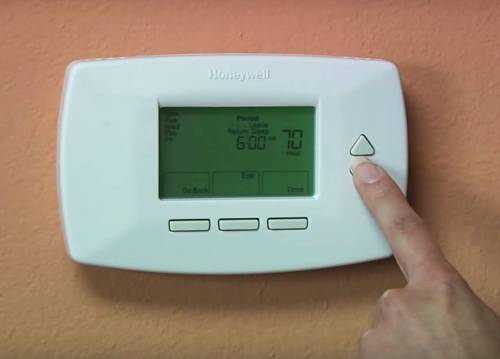
Province to power up smart thermostat program, rebates
5 minute read Preview Thursday, Feb. 12, 2026
When it comes to fixing health care, province must follow doctors’ orders
5 minute read Preview Thursday, Feb. 12, 2026
Bill aims to give MMF self-government treaty with Canada
2 minute read Preview Thursday, Feb. 12, 2026
What to know about EPA decision to revoke a scientific finding that helped fight climate change
3 minute read Preview Friday, Feb. 13, 2026
Get vaccinated for flu, COVID-19, measles to protect crowded hospitals: top doc
4 minute read Preview Friday, Feb. 13, 2026
Increased taxation requires thorough justification
5 minute read Preview Thursday, Feb. 12, 2026
Energy sector’s interest in Churchill heating up: Kinew
6 minute read Preview Wednesday, Feb. 11, 2026
Arviat, Nunavut chosen as main campus location for Inuit Nunangat University
3 minute read Preview Thursday, Feb. 12, 2026
U.S.-Canada bridge brouhaha deepens as White House says Trump could amend a permit for the project
4 minute read Preview Wednesday, Feb. 11, 2026
Vote to crack down on ‘nuisance’ protests set for city council
4 minute read Preview Tuesday, Feb. 10, 2026
Conservatives table motion on refugee claims in response to extortion wave
4 minute read Preview Wednesday, Feb. 11, 2026
Class-action suit against care home, WRHA can proceed, judge rules
3 minute read Preview Monday, Feb. 9, 2026