Becoming a Sovereign Nation 1867-1931

Please review each article prior to use: grade-level applicability and curricular alignment might not be obvious from the headline alone.

Truth, home, nature: Renaming process for Wolseley School 'requires care’

Maggie Macintosh 4 minute read Preview

Truth, home, nature: Renaming process for Wolseley School 'requires care’

Maggie Macintosh 4 minute read Wednesday, Oct. 15, 2025

Wolseley School will be renamed after the towering trees that surround it, a perennial grass found in nearby Omand’s Creek or a Michif phrase.

Read
Wednesday, Oct. 15, 2025

JOHN WOODS / FREE PRESS

Teresa Byrne, a Métis way of life teacher, speaks to some parents and students during a Wolseley School renaming community meeting Tuesday.

JOHN WOODS / FREE PRESS
                                Teresa Byrne, a Métis way of life teacher, speaks to some parents and students during a Wolseley School renaming community meeting Tuesday.
No Subscription Required

Life of pioneer for women’s rights in Manitoba chronicled in new account

Reviewed by Faith Johnston 5 minute read Preview
No Subscription Required

Life of pioneer for women’s rights in Manitoba chronicled in new account

Reviewed by Faith Johnston 5 minute read Saturday, Dec. 21, 2024

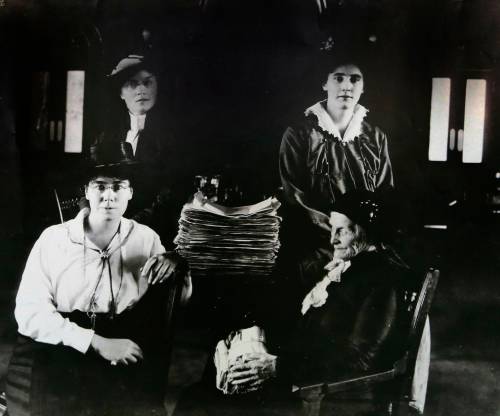
Manitobans with an interest in history are proud that our province was the first in Canada to grant women the vote, but if asked who led the women’s suffrage campaign here, most would say Nellie McClung. A minority might say it was a team effort. Few would name Lillian Beynon Thomas.

Law professor Robert Hawkins became interested in Thomas because of her determined efforts to have a dower act passed in Manitoba. After devoting several years to the dower campaign, Thomas realized it would never happen without women’s suffrage. So in 1913, she organized the Political Equality League to lead the fight.

Born in 1874, Thomas came from a relatively poor family homesteading near Hartney. After finishing high school, she taught in rural schools off and on for 13 years, saving enough money to further her education; in 1905, when only 11 per cent of university grads were women, Thomas graduated from Brandon University. The following year, having had enough of teaching, she landed a job with the Manitoba Free Press.

For the next 11 years, Thomas edited the women’s page of a widely distributed weekly, The Prairie Farmer, and for five years wrote a daily column in the Free Press as well.

Read
Saturday, Dec. 21, 2024

Free Press files

Clockwise, from top left: Lillian Beynon Thomas, Winona Dixon, Dr. Mary Crawford and Amelia Burritt presented the final petition for women’s suffrage on Dec. 23, 1915 to the Manitoba Legislature. The amendment to the Manitoba Elections Act allowing women to vote, the first such legislation in Canada, was passed on Jan. 28, 1916.

Free Press files
                                Clockwise, from top left: Lillian Beynon Thomas, Winona Dixon, Dr. Mary Crawford and Amelia Burritt presented the final petition for women’s suffrage on Dec. 23, 1915 to the Manitoba Legislature. The amendment to the Manitoba Elections Act allowing women to vote, the first such legislation in Canada, was passed on Jan. 28, 1916.
No Subscription Required

Rupert’s Land inhabitants blindsided by Canada’s purchase of their homeland in 1869

Tom Brodbeck 7 minute read Preview
No Subscription Required

Rupert’s Land inhabitants blindsided by Canada’s purchase of their homeland in 1869

Tom Brodbeck 7 minute read Saturday, Oct. 26, 2024

When the Hudson’s Bay Company (HBC) reached an agreement to sell Rupert’s Land to Canada in the spring of 1869, it came as a complete surprise to the people living in what is today Western Canada. They were neither consulted on the proposed annexation nor given any details about how it would affect their lives.

Read
Saturday, Oct. 26, 2024

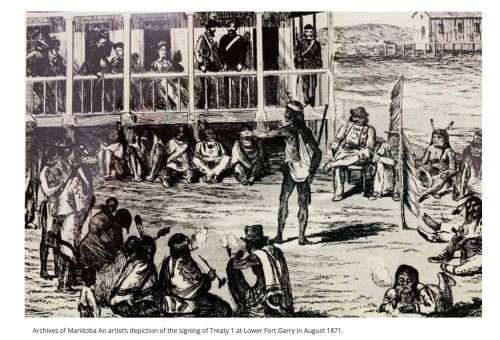
An artist’s depiction shows the signing of Treaty 1 at Lower Fort Garry in August 1871. (Archives of Manitoba)

An artist’s depiction shows the signing of Treaty 1 at Lower Fort Garry in August 1871. (Archives of Manitoba)

Winnipeg Railway Museum can punch your ticket to the past, but it also needs your help

Brenda Suderman 7 minute read Preview

Winnipeg Railway Museum can punch your ticket to the past, but it also needs your help

Brenda Suderman 7 minute read Sunday, Aug. 15, 2021

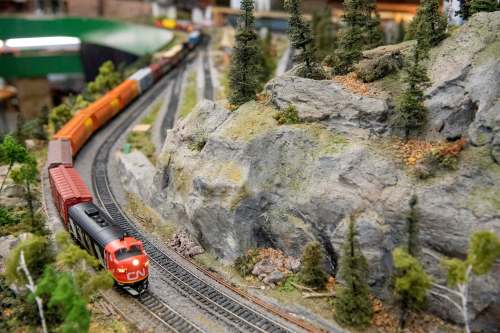
The Winnipeg Railway Museum, run by the Midwestern Rail Association and the Winnipeg Model Railway Club, is "the coolest indoor museum in Canada in the winter and the hottest ticket in town in summer."

Read
Sunday, Aug. 15, 2021

The not-for-profit museum relies on admission fees, donations and sales from its railway car gift shop to meet its modest annual budget of about $30,000. The museum’s board is working to find backers and new ways to raise operating funds. (Alex Lupul / Winnipeg Free Press)

The not-for-profit museum relies on admission fees, donations and sales from its railway car gift shop to meet its modest annual budget of about $30,000. The museum’s board is working to find backers and new ways to raise operating funds. (Alex Lupul / Winnipeg Free Press)

Harvesting rights were never surrendered

Jerry Daniels 4 minute read Thursday, Nov. 26, 2020

I AM dismayed that we are still arguing about the inherent rights of First Nation people to harvest from our lands and waters. Let me be clear, we have never given up our inherent right to hunt and fish.

The treaties we signed and the rulings of the highest courts of the Canadian state affirm our autonomy and freedom to engage in sustainable harvesting without interference from colonial governments.

This battle is happening across the country. Our Mi’kmaq relatives are fighting to protect their rights and livelihood on the East Coast, and here in what is now known as Manitoba, we have to defend against a provincial government that, in the middle of a global pandemic, is attempting to intimidate our people on their own land using the recently passed Wildlife Amendment Act.

Since the Wildlife Amendment Act came into effect on Oct. 10, more than three dozen people have faced charges or been given warnings by the provincial government, which has trumpeted their actions as “continuing enforcement” against “illegal hunting” in several recent news releases. Let’s be clear that the province is taking legal action against our people for exercising their inherent right to harvest; this debate is not about sport hunting. This is about our right to harvest to be able to provide for our families — the way we always have since time immemorial.
A country born amid controversy

Allan Levine 5 minute read Preview

A country born amid controversy

Allan Levine 5 minute read Friday, Jun. 30, 2017

Given his penchant to portray Canadian history as a glorious fusion of brazen courage, underdog determination, generosity of spirit and the march of progress, Prime Minister Justin Trudeau definitely would have been in his element had he been in Toronto 150 years ago.

The new province of Ontario had the most to gain from Confederation. By virtue of its large population, Ontario’s politicians were to dominate the new federal or central government and the province’s economic potential was seemingly unlimited. (It is not by accident that the western boundary of Ontario set in the early 1880s extends as far as Kenora, 1,900 kilometres from Toronto.)

Thus, on July 1, 1867, there was great optimism among Toronto’s 50,000 citizens. The ringing of the bells at St. James Cathedral at midnight on June 30 had signified that the Dominion of Canada was now a reality.

The publisher of the Toronto Globe, George Brown, a key player who, along with John A. Macdonald and George-Étienne Cartier, had made Confederation a reality, had stayed up most of the night composing a 9,000-word article about the meaning of Confederation that took up the entire front page of the Globe on July 1. “We hail the birthday of a new nationality,” he wrote. “A United British America, with its four millions of people, takes its place this day among the nations of the world.”

Read
Friday, Jun. 30, 2017

National Archives of Canada / THE CANADIAN PRESS FILES
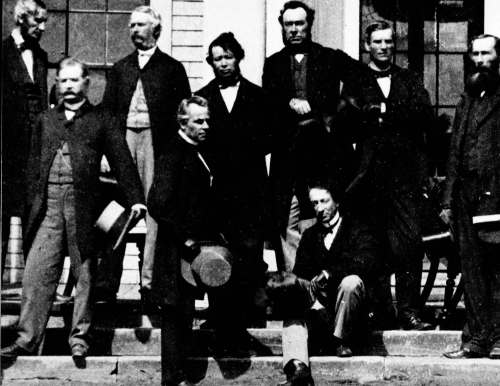
Several of the Fathers of Confederation at the Charlottetown Conference in September 1864. Sir John A. Macdonald and Georges-Étienne Cartier are in the foreground.

National Archives of Canada / THE CANADIAN PRESS FILES
Several of the Fathers of Confederation at the Charlottetown Conference in September 1864. Sir John A. Macdonald and Georges-Étienne Cartier are in the foreground.

While our 150th birthday party is a big, 'Dominion Day' began with respectful restraint

Randy Turner 16 minute read Preview

While our 150th birthday party is a big, 'Dominion Day' began with respectful restraint

Randy Turner 16 minute read Saturday, Oct. 11, 2025

It’s safe to say what is now called Canada Day had modest beginnings in these parts.As far back as 1869 — two years after Confederation and one year before Manitoba was born — the July 3 issue of the Nor’Wester, the paper of record for the “Colony of Assiniboia,” dutifully reported that celebrations on July 1 were muted.

“Dominion Day was kept in our little town by the raising of the ‘Canadian’ flag upon the now celebrated staff — said to be 70 feet, be the same 20 feet more or less — which flag was liberal sainted during the day by an ‘Anvil Chorus’ adapted to ‘God Save the Queen’ and ‘Hurrah! for the New Dominion,” the paper noted. “The affair was wound up by a large bonfire in the evening.

“Not a gun was heard, or a funeral note or anything else,” the account added, “but then you see the H.B.C. (Hudson Bay Company) is keeping her patriotism like champagne, well bottled and wired down, for a future occasion, when we may expect to see it burst forth in a manner calculated to astonish the natives.”

Of course, these were the days of the Riel Rebellion in the Red River Colony. Not exactly the time to be popping that “champagne” in public. Besides, the majority of the less than 1,000 colony settlers considered themselves British. And a vast majority of residents, the Métis under Riel, were literally at war with the new Canada.

Read
Saturday, Oct. 11, 2025

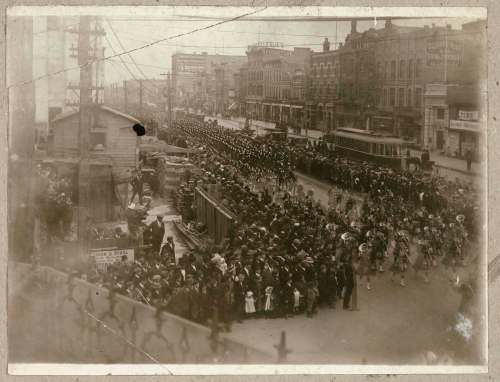
Jubilee parade 1897

Jubilee parade 1897

Century of progress: 'Prairie grit' helped Manitoba women secure the right to vote

Mia Rabson 7 minute read Preview

Century of progress: 'Prairie grit' helped Manitoba women secure the right to vote

Mia Rabson 7 minute read Monday, Oct. 6, 2025

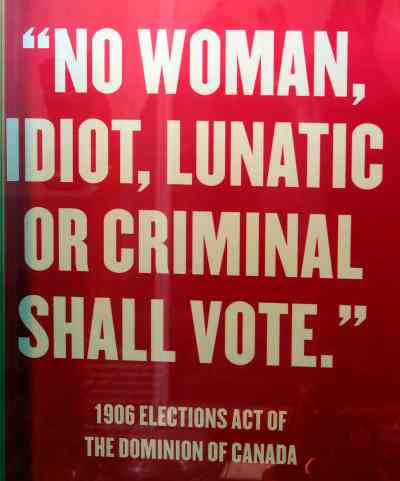
OTTAWA — Almost a century after Nellie McClung pushed Manitoba to become the first province to allow women to vote or run for office, she would have been pretty proud of what women have achieved, says her granddaughter Marcia McClung.

But she also probably would have been a little disappointed to see women have not achieved true equality, be it in the workplace, the political world or even in many families.

Although Nellie McClung dreamed that if women could secure the right to vote, all the other rights to become equals with men would surely follow, she knew when she died, in 1951, that had not happened.

“She did acknowledge there wouldn’t have been any progress without the vote,” Marcia said in an interview with the Winnipeg Free Press. “It was a really significant step.”

Read
Monday, Oct. 6, 2025

BORIS MINKEVICH / WINNIPEG FREE PRESS
This is painted on the back side of one of the glass protective boxes.

BORIS MINKEVICH / WINNIPEG FREE PRESS
This is painted on the back side of one of the glass protective boxes.

Constitution Act, Treaty 1 at CMHR

By Ashley Prest 3 minute read Preview

Constitution Act, Treaty 1 at CMHR

By Ashley Prest 3 minute read Thursday, Dec. 18, 2014

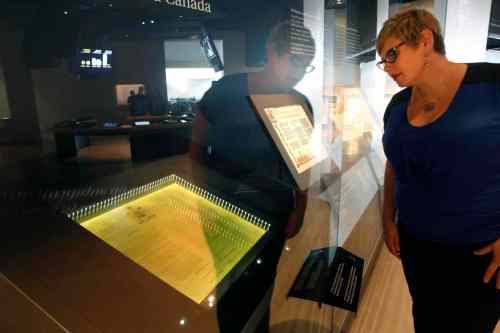
The original Treaty No. 1 land agreement of 1871 and the 1982 Proclamation of the Constitution Act are two of 11 historic and rarely loaned artifacts on display at the Canadian Museum for Human Rights.

The documents can be viewed in the CMHR's Protection Rights in Canada gallery and Canadian Journeys gallery and are on loan until September 2015 from the Library and Archives Canada based in Gatineau, Que. The display has been open to public viewing since the museum's opening day on Nov. 11.

Signed at Lower Fort Garry by Chippewan and Cree First Nations leaders and Queen Victoria, the Treaty No. 1 agreement is the original document with affixed seals and ribbon.

"Just looking at the display in the case, we've got 250 years of Canadian legal tradition and human rights tradition in these documents. There is a really wide breadth of historical significance," said Heather Bidzinski, the CMHR's head of collections.

Read
Thursday, Dec. 18, 2014

WAYNE GLOWACKI / WINNIPEG FREE PRESS
Heather Bidzinski views the Proclamation of the Constitution Act document at the Canadian Museum for Human Rights Wednesday.

WAYNE GLOWACKI / WINNIPEG FREE PRESS
Heather Bidzinski views the Proclamation of the Constitution Act document at the Canadian Museum for Human Rights Wednesday.
No Subscription Required

Une geôle dans son état originel

Sabine Trégouët de La Liberté pour le Winnipeg Free Press 8 minute read Preview
No Subscription Required

Une geôle dans son état originel

Sabine Trégouët de La Liberté pour le Winnipeg Free Press 8 minute read Saturday, Nov. 17, 2012

LA petite prison de Saint-Claude est une perle pour le patrimoine canadien. En effet, ce lieu d’histoire et de patrimoine constitue la seule prison municipale existant par elle-même dans l’Ouest canadien selon le Ministère de la Culture, Patrimoine et Tourisme du Manitoba.

“C’est la seule prison dans toutes les prairies qui subsiste à son état d’origine,” affirme le membre du comité de tourisme et de marketing de Saint-Claude, Roger Bazin. “Il y en avait d’autres de ce type aux alentours de Notre-Dame-de-Lourdes ou de Saint-Lazare, mais elles ont souvent été détruites.”

Construite en 1912, la prison a initialement été construite pour calmer les turbulences.

“Beaucoup d’employés des fermes venaient à Saint-Claude la fin de semaine pour boire dans le petit salon à bière et il y avait souvent des bagarres, raconte Roger Bazin. Il y avait des problèmes de boisson évidemment, mais aussi des vols et d’autres incidents. Comme on est éloignés de Winnipeg, la prison a été construite à la demande de la population pour mettre en détention ceux qui causaient des soucis.”

Read
Saturday, Nov. 17, 2012

Roger Bazin dans l’ancienne prison de Saint-Claude.

Roger Bazin dans l’ancienne prison de Saint-Claude.