
Economics and Resources
Please review each article prior to use: grade-level applicability and curricular alignment might not be obvious from the headline alone.
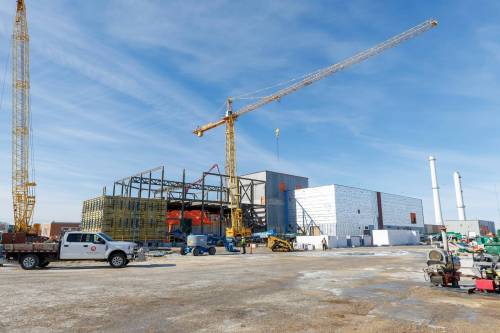
City tries to get the most bang for its (sewage) buck
4 minute read Preview Friday, Nov. 7, 2025
Invention of combine part reaps recognition in Time
4 minute read Preview Saturday, Nov. 1, 2025It’s easy to take arts and culture for granted. Not because they don’t matter, but because they’re woven so deeply into our daily lives.
They’re in the stories we tell, the music in our earbuds, the festivals that bring neighbours into the streets and the murals that brighten our downtowns.
Arts and culture are part of who we are as Manitobans.
But the arts aren’t just “nice to have.” They’re essential. Especially right now.
First Nations accuse Hydro, province, feds of profiting from land
2 minute read Thursday, Oct. 30, 2025Two First Nations are suing Manitoba Hydro and the provincial and federal governments, claiming the institutions have made billions of dollars through hydroelectric operations on land the communities never agreed to cede.
In a statement of claim filed last week in the Court of King’s Bench, Canupawakpa Dakota Nation and Dakota Tipi First Nation in southern Manitoba are seeking damages for alleged infringement on their rights.
The court filing accuses the public utility, the province and the federal government of breaching duties owed to the Dakota nations and of unjustly enriching themselves at the expense of the communities, without consultation.
“The yearly revenue Manitoba Hydro produces from the land and particularly, the activities, is substantial,” reads the lawsuit.

The road not taken: lowest number of Manitobans in three decades cross border at Pembina in July, August
5 minute read Preview Wednesday, Oct. 29, 2025
On second anniversary of Oct. 7 attacks and start of Gaza war, officers say rushing to cover painful vandalism reduces odds of arrests
8 minute read Preview Tuesday, Oct. 7, 2025
Roasters and cafés grapple with rising coffee bean prices
4 minute read Preview Monday, Oct. 6, 2025Big things are ahead for northern Manitoba.
Political leaders at every level are focused on unlocking the North’s tremendous potential, and what sets this moment apart is the scale — which comes with the need for thoughtful planning that includes people, not just infrastructure, to help us realize the opportunity ahead.
Churchill could emerge as a vital Canadian port, with year-round shipping supported by icebreakers, an upgraded railway and all-weather roads connecting isolated communities. Upgrading Manitoba Hydro’s northern transmission system and investing in new projects like the Kivalliq Hydro-Fibre Link, would deliver clean energy and broadband—opening new possibilities for families and businesses across Northern Manitoba and Nunavut. Major mining initiatives are advancing and have been recognized as nationally significant.
These ambitious undertakings have the potential to transform Manitoba, benefiting all Manitobans — especially those in the North — with good, new jobs. Realizing this future will require people (thousands of them) —welders, carpenters, electricians and heavy-duty mechanics to build and maintain energy and transport systems; operators to construct roads; IT specialists and logisticians to run modern supply chains; and nurses, teachers and social workers to strengthen communities as they grow. With large-scale projects underway across Canada, competition for a skilled workforce will be fierce.
The simplest way to raise living standards? Build a better business climate.
Manitoba is a small, open economy. That should be freeing. It should mean we focus on what we do best, and trust the market to send signals about where investment belongs. But more often, government takes the wheel.
The record on that isn’t good. Governments like to believe they can allocate capital more efficiently than markets. History says otherwise. The “winners” chosen often reflect politics more than economics.
Tariffs are the clearest example. Drop a tariff, and one industry will feel the pain of new competition. But the benefits are spread out: lower prices for consumers, lower costs for businesses, higher productivity overall. Raise a tariff, and the reverse happens.
Big Tobacco and Big Oil are eerily similar. One knowingly produces a product that slowly but surely kills its consumers. The other knowingly produces a product that surely but not slowly kills the planet.

Only moratorium can save moose population: MWF
4 minute read Preview Wednesday, Sep. 24, 2025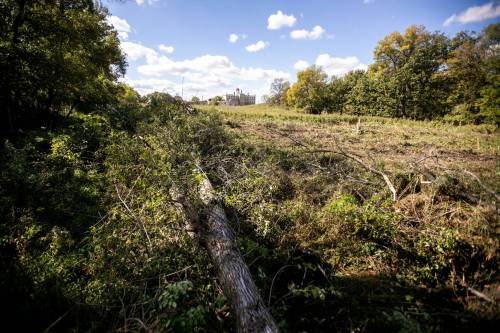
Another subdivision, another city problem
5 minute read Preview Tuesday, Sep. 23, 2025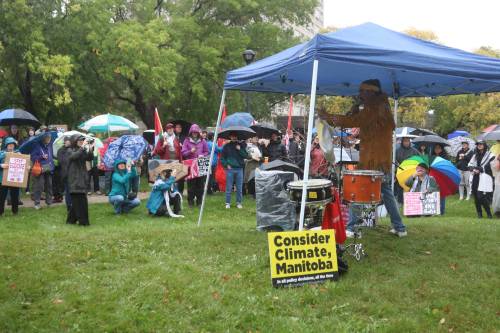
Ralliers decry Kinew’s pro-pipeline policy
4 minute read Preview Saturday, Sep. 20, 2025
St. Boniface residents drained after demolition of Happyland pool
5 minute read Preview Friday, Sep. 19, 2025
Hudson’s Bay seeks approval to auction off 1670 charter, court filings show
5 minute read Preview Friday, Oct. 10, 2025
North Dakota missing its Manitobans
7 minute read Preview Friday, Sep. 19, 2025
Will electric tractors gain traction? At a pilot event for farmers, researchers see possibilities
7 minute read Preview Friday, Oct. 10, 2025
Clarity, ‘competitiveness’ key to name change
4 minute read Preview Thursday, Sep. 18, 2025Manitoba municipalities and financial controls
4 minute read Tuesday, Sep. 16, 2025Late last month, Manitoba Auditor General Tyson Shtykalo released a report aimed at ensuring the provincial government exercises greater oversight over spending by municipal governments across the province.
Following a yearlong investigation of allegations of financial mismanagement by several local governments, the AG discovered that the province does not currently have a comprehensive process to follow up on complaints regarding municipal governments, review financial submissions made by them, or even monitor the spending of provincial grants they receive.
Shtykalo emphasized that the province provides millions of dollars in funding to municipalities annually and that, “With this funding comes a responsibility — both for municipalities and the Department of Municipal and Northern Relations — to ensure effective stewardship of public resources.”
To many Manitobans, that is likely regarded as nothing more than stating the obvious. All recipients of public funds must handle those monies with care and be both transparent and accountable for how the dollars are spent. And yet, the auditor general found that adequate controls are not currently in place to ensure that is happening.
Missed payments by Manitoba small businesses rise
3 minute read Tuesday, Sep. 16, 2025Missed payments by Manitoba small businesses rose nearly 13 per cent earlier this year, new Equifax Canada data show.
The credit bureau counted 2,005 Manitoba businesses that didn’t meet at least one payment deadline between April and June, when looking at financial trade delinquencies. Construction, mining, transportation and wholesale trades were among the categories to see increased delinquency rates.
“Provinces that have been stable in the past are really showing areas where they’re starting to pull apart,” said Jeff Brown, Equifax Canada’s head of commercial solutions.
Manitoba’s financial trades delinquency rate year-over-year change outpaced the national average of 8.67 per cent.

‘As we grow, our roots only grow deeper’: Red River Mutual insurance company celebrates 150 years
6 minute read Preview Monday, Sep. 15, 2025
Equatorial Guinea enforces yearlong internet outage for island that protested construction company
6 minute read Preview Thursday, Oct. 16, 2025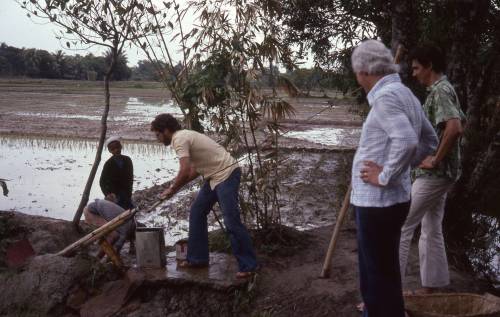
Local engineer was a real game changer
5 minute read Preview Saturday, Sep. 13, 2025Canadian farmers facing harvest cash-flow crunch, talking support
4 minute read Saturday, Sep. 13, 2025Canadian farmers are understandably disappointed the federal government’s response to China’s punishing import tariffs on canola, pork, peas and seafood hasn’t so far included direct compensation.
After all, the duties are widely seen as retaliation for Canadian tariffs effectively locking Chinese electric cars out of the local market — a policy decision that had nothing to do with agriculture. This is the second time in recent memory China has targeted Canadian farmers to score points on unrelated issues. It’s unlikely to be the last.
While the full impact remains unclear, when Canada’s second-largest canola customer imposes tariffs of 75.8 per cent on seed and 100 per cent on oil and meal, it’s a safe bet demand will be curbed and prices will be lower than they would have been otherwise. Industry estimates place the eventual costs in the range of $2 billion.
However, commodity prices this year are depressed across the board — for a host of reasons. Much of the new-crop canola has yet to be harvested and very little has been sold.